I am not my job title. (And neither are you)

I find it hilarious that in the age of the wireless-internet-based-paperfree-cloud, the ancient ritual of business card swapping remains strong in most industries. It’s weird, right? And if it’s not the business card exchange, it’s that initial conversation about “what you do” or “who you work for”. It occurred to me that in the moment of information exchange, I’m not just sharing my employment or contact details, but I’m presenting my name, title, position, my influence and a chance for you to judge me based on that.

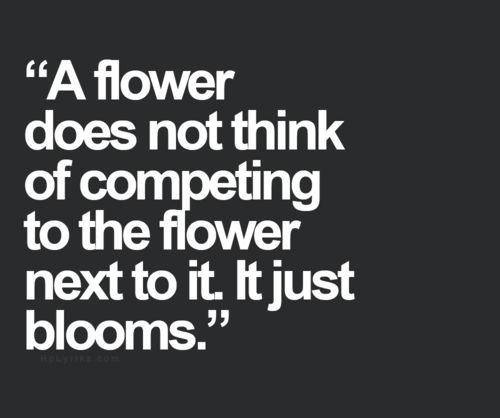
“What would the world look like if our choices made us better people, not richer or more influential?”

The past 12 months (or so) have been a journey* of learning for me. Or should I say RE-learning? Y’know those times when you think you’ve got a life-lesson down pat, but you get thrust into a position of learning once more.

In the past I’ve found myself in leadership roles that literally defined the way people saw me. When that role changed, so did many relationships, and admittedly I was left with the challenge of shaking the meaning I had placed on that identity.

I went from full-time to part-time, manager to co-ordinator, from a team of hundreds to a team of about six. Some people thought I was crazy.

Then, just when I thought that lesson was over, there it was again. My short part-time contract ended and I was faced with the potential of being ‘just a casual’ for a while. No full-time pay check, no business card, no paid leave, no influence, no team to manage, just casual shifts. Was that hard? Totally! Was it good? Actually, yes!

Did my change in job title effect a change in who I am? No. I discovered that my mini identity crisis I’d experienced earlier had equipped me to cope with the change again.

IMG_4582I learned that despite the (reoccurring) change in my circumstance, I was still Jessica Bigg, Darren’s wife, Lachie, Tommy & Charlotte’s awesomeAunty, Joe & Joy’s daughter, Emma & Caleb’s sister, singer, chocolate eater, and try-hard-blogger.

How my business card reads doesn’t affect the way I care about other people, how I prioritise my family or what I believe in. It doesn’t change WHO I AM.

The corporate-ladder-climbing culture needs to be addressed as we ask ourselves what matters most. At the end of the day, our jobs are temporary anyway – like so many other things we look to for self-gratification/fulfilment/definition.

I don’t believe this life is about building your status. It’s about the way you serve, love, support, and treat other people regardless of your or their job titles.

So, how do you define yourself? Is it your job title? Stamps in your passport? The car your drive? Your house/mortgage? Your wardrobe? Maybe it’s your relationship status?

I am not alive to impress you.

I am alive to be the best me I can be.

– – – – – – – – – – – –

*I’m SO over the word ‘journey’. I’m open to suggestions for a decent replacement.
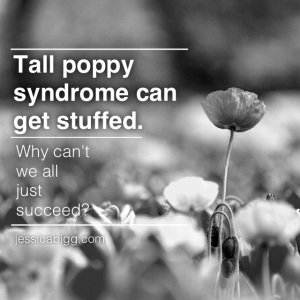
 

Tall poppy syndrome can get stuffed.

The only reason I started a blog years ago was because I had to post journal entries online for a uni subject. I wrote very occasionally but really enjoyed it. This year, with a bit more time on my hands, I challenged myself to write more intentionally and more often. I upgraded to a new platform, got a new address and decided to share my site across my social media platforms with the help of a title picture with ‘jessicabigg.com’ included.

When I published ‘Life after 30‘ recently, I wondered if the way I’d included my website looked a bit naff and I feared I had just placed myself in the dreaded ‘tall poppy’ firing line…

So, to respond to the silent critics (both in my head, and in real life, probably) I’d like to answer a few questions and tell ‘Tall Poppy Syndrome’ (and those those who subscribe to it) to get STUFFED.

Q. What is tall poppy syndrome anyway?

It’s a social phenomenon where people who grow, succeed or stand out, are resented and criticised by others. (Yes, even by their peers.) It’s the assumption that you can’t be successful without being arrogant too, but it’s not the success that’s the problem; it’s the assumed superiority of the individual we don’t like.

It’s a huge part of Australian culture and something even I fall victim to, without even knowing. (Culture can be sneaky like that, but more on that in another post I wanna write soon.)

Q. Why start my own website?IMG_4487

Firstly, it’s just a blog all I did was pay the $18/year to drop the clunky ‘wordpress’ bit from the address. I couldn’t think of a creative alternative so I just kept it my name. Simple.

Secondly, I actually wrestled with potential arrogance of owning ‘jessicabigg.com’. I asked around, sought advice, wondered if it would be super obnoxious… The advice I got was:

1. If I didn’t secure jessicabigg.com someone else could’ve.
2. It wasn’t expensive.
3. Does it REALLY matter? Nope.

My purpose for writing hasn’t changed over the years. I still only write for the fun of it and hope that one person might read it, enjoy it, be encouraged by it, whatever they need in that moment.

Q. Why the title pictures? Why the social media promotion?

It’s not promotion, it’s accessibility. I did wonder if it looked a bit ‘tall poppy’, but those who know me know that’s not what I’m about. Of course I write because I hope someone might read it, but no, I don’t care how many likes or shares I get. I do keep an eye on my site statistics but only because I’m a bit of a geek that way and I’m so curious what topics people engage with.

I write because I have something to say,  but I think we ALL have something to say. My awesome friend Bek recently started her own blog and she’s writing some great stuff! Go Bek!

Q. Why can’t we all just succeed? 

Why is the default to find fault in others? I’d rather assume that everyone is awesome, and see everyone succeed at the things they love, whether it’s writing a blog, running a social media account, being CEO or a full time mum.

Here’s a thought: Maybe instead of cutting down the tall poppy’s, we should hang on to them so we can ALL grow. Together.

IMG_4616

Good leaders example good rest.

I believe there are two kinds of busy – a good and a bad kind. The good kind is what I mentioned here and is common for people in their 20’s. The bad kind is also common, especially among leaders, and is very dangerous. One difference between the two is the presence of rest. You can be good-busy and still rest. If you get stuck in the bad-busy chances are you’ve lost all your rest time and are headed towards burnout.

We all know the leadership road is tough, hard work, sometimes lonely, taxing and usually pretty exhausting. We also know leadership automatically puts people under our influence, people who follow our example (like it or not). I want to ask the question:

How are we exampling healthy REST to those we influence? 

IMG_4434Truth is, I don’t think we are. Not generally speaking anyway. This got me thinking — maybe we’re bad examples because we don’t know how to do it in the first place? 

If this is hitting home (and be honest, for some of you, it is) please indulge me as I offer a suggestion or two on the matter:

1. Know what rest means to you. 
This isn’t as easy as it sounds. It’s not just the coffee-with-friends kind of downtime, I mean the really deep, soul filling, brain-switching-off kind of rest. Only you can truly know what this is for you. It might be an activity, a person or people, a place… It might even be something that is a special time commitment. For me it’s music, decent time with my husband & family, and writing. (I’ve recently discovered that writing isn’t just fun, it’s an outlet that brings clarity to my head. Lovely!)

BTW – if your rest time involves people, make sure it’s not people who require much from you. It’s ok to take your leader-hat off and just be you for a bit.

2. Make rest part of your weekly rhythm.
Seems simple right? THEN WHY AREN’T WE DOING IT? #whereismysoapbox
There should be no compromises here people. Stop the glorification of busy. Choose a day and block it out for rest. If important stuff takes over your rest day (which happens) only say yes to the important stuff if you can reschedule your rest day. My basic rule here is: the longer it takes to have a rest, the more rest time I will need.

3. Don’t apologise for needing rest.
It was 7am on a Tuesday morning. I’d only had about an hour’s sleep. My alarm went off and I was acutely aware of how awful I felt after a sleepless night. My body was practically yelling at me that it’d had enough and I needed to stop. I was so looking forward to a catch up with someone but had to listen to my body, take the day off and reschedule. I was sorry that I didn’t get to see my friend, but I wasn’t sorry that I needed to rest. I know my body well enough that when it presents certain symptoms I have to listen. I will unapologetically turn down an invitation to hang out if I need to prioritise rest.

4. You are here to example REST as much as anything else. 
Yes, we will suffer for our calling. Yes, we sometimes will run ourselves into the ground. Yes, we will go above and beyond for the things and people we love. Yes, these are all great qualities to have as a leader and to example. But let me ask you: How are you exampling REST to those you influence? Passion and commitment are VITAL to your role but it’s not ok to let that passion steal your rest and burn you out. Those in your influence will see your example and naturally follow your lead. I have made it a priority to instil into those I mentor, a culture of understanding that rest and space is necessary.

5. Act now. Avoid disaster.
Develop good habits before it’s too late. Too many Pastors/Youth Workers/Leaders stay on the bad-busy road for too long and it’s time to set up a better way. I talk a lot about my physical symptoms or that my body ‘yells at me’ when it’s had enough. The specifics here are personal but trust me, you don’t want to get to the point where your capacity is clipped because your mind & body can’t handle it.

(And if you develop good habits now, you’ll example these habits to others and hopefully teach them how to balance life, serve well, rest well and avoid burnout.)

If you already have good resting habits, I APPLAUD YOU. Please please please share with me (and others) what you do to stay in good emotional health. We need to make it a cultural norm that we have time to rest properly.

Perhaps you struggle here and have awesome intentions but fail somewhat when it comes down to it. Fear not my friend, no one is perfect. Just promise me you will try.

(Fun fact, I mentioned the word ‘rest’ 25 times in the this blog. Guess I must be passionate about the topic….)


How to love your leaders.

[Originally published 8th November 2012]

This time of year for me is an intense world of emails, meetings, phone calls and general running around. I often feel helpless when somebody asks me “is there anything I can do to help?” because from a certain point onwards you need to just do it yourself. Delegation is  great but it can be time consuming. Also, the need for help often comes up at the last minute meaning only those who are free at the time can step in – which in this time-poor world, won’t be many people.

Having thought about it some more I believe there is a lot you can do for your leaders, not just when they’re busy, and it isn’t necessarily about taking the task off their hands. (Although that is amazing when that happens.) So here’s some thoughts I’ve come up with on loving your leaders.

1. Be resourceful

These days there are lots of ways to share information. I use all sorts of platforms – our website, facebook (pages AND groups), email, newsletters, text messages, Dropbox, and of course, the good old fashioned face-to-face conversation. (Yes, people still do that.) On top of that I try to make sure I’m not the only person with the answers so if I’m unavailable there should be someone else who can help.

If you need some info from your leader, perhaps investigate a few other pathways first.

2. Keep it “between the nines”

I absolutely love how relational my work is. It is by far the most amazing thing to be in contact with so many awesome people. However, contrary to my ‘image’, I do have a life outside of my work and that needs to take priority too. So to keep my work/life balance on track, I don’t respond to work related calls/texts before 9am or after 9pm. I’ll be honest, I don’t appreciate my phone going off outside of these times. I need some headspace too from time to time. Pretty sure anyone in leadership does.

3. Facebook is personal, and not that efficient.

Everyone is on it, most of us love it, and it can be an incredible tool for communication. However, it’s still personal which can make it hard to manage ‘work talk’ when you’re only online cos you wanna see the photo your overseas friends just posted from their holiday. When contacting your leader, be cautious when you use facebook for this. With the amount of email traffic I get, I’ve developed a flagging system that helps me monitor my replies. I can’t do this in facebook which makes it difficult.

4. Know you’re leaders personality type.

I’m introverted. Yep, it’s true. Speaking publicly and leading large groups of people is a learned skilled (one that I love) but it drains me. Heaps. I don’t disappear after a large event because I’m being unsociable, I’m just exhausted and can’t function properly so I need to take some space. Knowing your leaders personality type will help you understand how and why they interact the way they do, preventing any confusion and potential hurt. This is important for community and sometimes takes some forgiveness. (Leaders get tired and stressed and don’t always say everything in the perfect and most pastoral way…)

5. Respect personal space.

I’ve alluded to this a bit already. As someone’s influence and responsibility grows, so does their need to protect their emotional well being. I believe it’s vital for leaders to spend adequate time with people they don’t lead. For me, this is expressed in the time I keep on Sundays for my fiance and family. I love making time for people when I can, but I find no shame in saying no because I know I need a break and fall asleep on mum and dad’s couch after family lunch.

6. Pay attention.

Repetition is frustrating. (There, I said it!) Listen. Ask questions. Take notes if you need to. Know what is desired of you to fulfill whatever your role is. A good leader will know how to support and serve you either way, but the journey is a lot more enjoyable (and fruitful) if you don’t have to backtrack over details.

Last little tip – offer some encouragement with every request. A little encouragement goes a long way. I love the emails I get that say thanks as well as ask me something. 🙂

I hope this has landed well — I’ve tried to be honest but nice about it. It’s not about any kind of separation between leaders and those they lead. It’s about recognising that we are all people with needs that when met, help us be the best versions of ourselves. I want to be the best leader I can be and if that means I have to ask you to not text me after 9pm, I’m ok about that.

Just saying.

J xo